
How do you integrate sustainability into a curriculum when your educators teach everything from sports science to classical poetry?
This was the central, real-world challenge we faced during our three-day From Frameworks to Practices training event at Université Bourgogne Europe (UBE) in Dijon. From 26 – 28 May, 30 participants representing five European countries gathered to push the GREENVERSITY project forward.
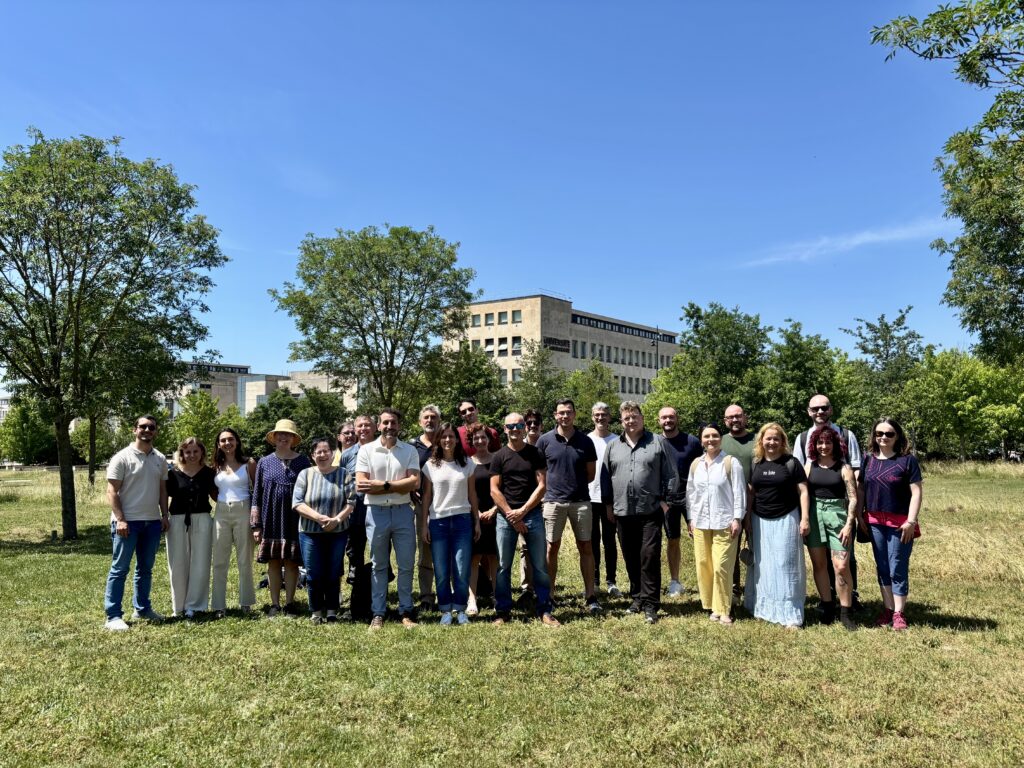
Driven by 30 hours of intense collaboration, an average temperature of 30 degrees (from a heat wave we didn’t plan for!) and a fair amount of local coffee and wine, our goal was not to just review our progress, but to actively stress-test how we equip higher education learners with the competencies needed to face planetary challenges.
Here is a look at the hurdles we tackled, the data we shared and the community we are building.
The Challenge: Bridging the Disciplinary Gap
The GREENVERSITY CORE Framework adapts the European Commission’s GreenComp into measurable learning outcomes for universities. It focuses on four key areas:
- Embodying Sustainability Values
- Embracing Complexity in Sustainability
- Envisioning Sustainable Futures
- Acting for Sustainability
However, frameworks are only as effective as their practical application. A major takeaway from our working sessions was realising that the E-Course for Educators needs far more concrete, discipline-specific examples of how to apply the GREENVERSITY Framework. We are learning that moving educators from theory to genuine competence requires giving them the exact tools to translate a concept like “Systems Thinking” into an actionable lesson, whether they are in an engineering lab or a literature seminar.
Testing Pedagogies in Real-Time
Rather than just talking about teaching, we spent significant time doing it. We explored innovative teaching approaches to anchor these competencies in the classroom. For example, the methodologies for “Acting for Sustainability” demonstrated how arts-based approaches and interactive scenarios can move students from passive learners to active participants.
One of the activities focused on Futures Literacy, a competence that we worked through in small groups imagining best case and worst case scencarios on university campuses five years from now with the advacements of AI using dixit cards. It was interesting to see not just the different scenarios that groups came up with, but how the beautiful illustrations encouraged creative thought process, allowing us to design futures that we may not have imagined otherwise. Best case scenario? How about internet-free zones where students can relax, dance, study and do just about anything for a needed screen-break!


The value of this hands-on approach was clear. As one participant noted in what they enjoyed most about the event:
“The specific pedagogic methodologies… feeling encouraged and empowered to work, inspiring workshop methods, and the practical exercises.”
What Actually Drives Student Action?
A beautifully designed curriculum means little if students aren’t motivated to engage. On the final day, we talked about what genuinely motivates students to embrace sustainability initiatives.
Research (have a look here, here and here), including a small survey we conducted, shows that student motivation is highly mixed and conditional. While the desire to participate in green iniaitives—with 70.4% of surveyed students stating that green competencies are important for their future jobs, and 74.1% feeling a strong sense of intergenerational responsibility—we cannot rely on awareness alone.
To turn intent into action, we discussed several necessary steps:
- Connect to Practical Benefits: Participation spikes when green initiatives are directly linked to ECTS credits, CV value, certificates, or micro-credentials.
- Highlight Local Impact: Students are most motivated to take on leadership roles when they can clearly see the positive, direct impact their actions have on the local community.
- Build Peer-Led Structures: Creating ambassador roles and leveraging student unions provides the social proof and peer support needed to increase engagement.
- Frame as an Asset: We need to frame green competencies not just as environmental ideals, but as critical employability, negotiation and leadership skills.
Building a Network, Not Just a Framework
Sustainability is a collective effort. Moving from isolated “green classrooms” to an active ecosystem requires strong international networks and shared resources. We discussed moving beyond just a standard LinkedIn group—which will launch later this year—by implementing hybrid strategies like regional seminars, international webinars and short “shadowing” programs between partner universities.


We fostered these connections not just in the workshop rooms, but through shared experiences. Climbing the 366 steps of the Philippe Le Bon Tower provided a stunning view of Dijon and a moment to bond. Reflecting on the social activities during the event, participants highlighted the value of these moments:
“Really nice to see all the skyline and the explanation about weather sensors… a very nice way of getting to know each other.”


As we concluded the event with a celebration of collective learning, it was evident that the true strength of this project lies in the consortium’s shared ambition. We are leaving Dijon with a clear mandate: refine our tools, ground our frameworks in practical realities and continue building the future of education for sustainability together.